Dynasty Nerds
3.3 84.00 Reviews
Analysis By AppCompare
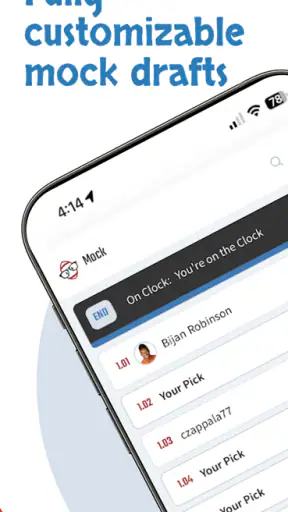
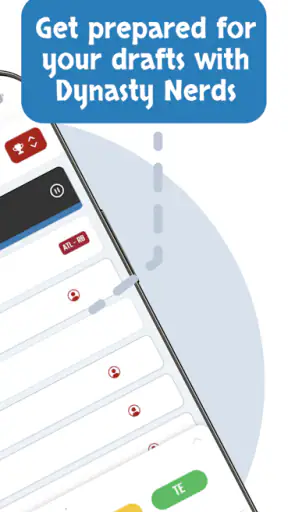
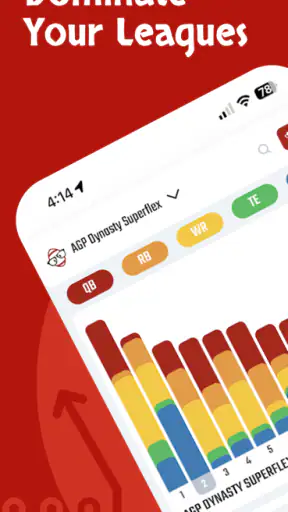
Dynasty Nerds is a focused sports app for fantasy football managers who want to practice dynasty mock drafts rather than simply read rankings. I found its value in the way it turns a vague draft plan into a repeatable exercise: you can test a strategy, notice where your roster construction starts to wobble, and return to the same kind of decision with a clearer idea of what you would do next time. It is free to download, aimed at Everyone, and developed by Dynasty Nerds, but its narrow purpose matters more than those basic details.
My overall view is straightforward: this is more useful as a draft-training tool than as a complete fantasy football command center. If you already play dynasty leagues and want a convenient place to rehearse selections, it can earn a spot in your routine. If you are looking for live league management, broad sports coverage, or a polished all-in-one fantasy platform, you will probably find the experience too limited.
What the mock-draft experience does well
The app’s strongest idea is repetition. Dynasty drafts are difficult because every pick carries two timelines at once. A player may help immediately, but another selection may offer a longer runway. In a normal league, I can spend too much time admiring a single player and lose track of how my roster is developing. A mock draft gives me a safer place to expose that habit.
I especially like using a mock as a decision rehearsal rather than treating it as a prediction of what will happen in my real league. Before a draft, I can enter with a loose plan, make the early selections, and see whether I still believe in that plan once the board changes. That distinction is important. The app is at its best when I use it to test my thinking, not when I expect it to tell me the one correct pick.
A practical routine is to run one mock with an aggressive youth strategy, another with a balanced approach, and a third that prioritizes immediate production. I then compare the shape of the roster instead of obsessing over individual names. Did I leave myself exposed at a position? Did I collect too many players whose value depends on patience? Did the search for upside make the team difficult to start next season? This kind of review turns a short session into something more useful than casually tapping through a draft.
That workflow is also helpful for people who draft on a phone while commuting, waiting for a match to start, or taking a short break from work. A mobile mock does not require the same preparation as opening a spreadsheet and building a custom model. I can use it for a quick mental warm-up, then save the deeper analysis for a larger screen or a league-specific tool.
Dynasty Nerds also benefits from being clearly centered on dynasty football. Traditional fantasy football advice often emphasizes the coming season, while dynasty decisions require attention to age, opportunity, roster timelines, and future flexibility. Even without turning every session into a lecture, the format encourages me to think beyond the next few weeks. That makes it more relevant to a manager who is rebuilding or trying to extend a competitive window.
Three ways I would use it before a real draft
My first use would be a pressure test for rankings. I would make a selection I feel strongly about, then deliberately avoid that player in the next mock. This reveals whether my strategy is genuinely adaptable or simply attached to a familiar name. The result can be uncomfortable, but that is exactly why the exercise helps.
My second use would be roster-balance checking. Instead of stopping after the first few rounds, I would continue far enough to see whether the early choices force awkward decisions later. In dynasty formats, a draft can look excellent at the top and still leave a roster lacking depth or flexibility. Watching that problem develop is more informative than reading a list of preferred players.
My third use would be a pre-draft confidence check with friends. Each person can run through the same general situation independently and compare the choices afterward. The useful conversation is not “who got the best team?” but “which assumptions caused us to value the board differently?” That makes the app a discussion starter for a league group, particularly when managers disagree about competing now versus building for later.
There is another subtle benefit: mock drafts expose how quickly I make decisions when the clock is not real. If I repeatedly choose the same type of player whenever I feel uncertain, I can identify a bias before it costs me in the actual draft room. I would keep a short note after each session, recording only the two or three decisions I regretted. That is more actionable than saving every pick without reflection.
Where the app feels less convincing
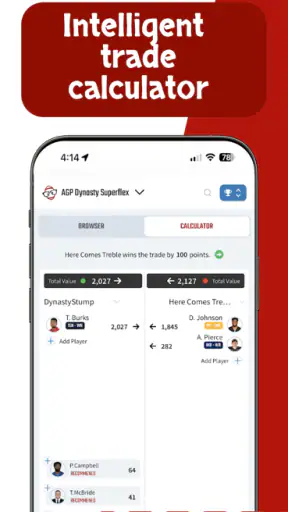
The narrow focus that makes the app easy to understand also limits it. A mock draft is only one part of dynasty management. After the draft, managers still need to evaluate trades, waivers, contracts or league settings where relevant, lineup choices, and the changing value of players. I would not install this expecting it to replace a league host or a full fantasy management service.
There is also a risk of false confidence. Completing several drafts can make a strategy feel proven even when the assumptions behind it are weak. The app can show me what happens after my choices, but it cannot automatically make my process wise. I still need to question the player pool, the scoring format, team context, and my league’s behavior. A mock is a model of a draft, not a guarantee of the real market.
That limitation becomes especially important for unusual league settings. A dynasty league with deep benches, different starting requirements, or nonstandard scoring can produce priorities that do not match a generic mock. I would use the app to sharpen broad instincts, then check every important decision against my actual league rules. Managers who want highly customized simulations may prefer a spreadsheet, a desktop draft room, or a platform built around their specific league.
The average rating is 3.3 from around 130 ratings, with roughly 84 written reviews. I read that as a sign to keep expectations measured rather than as a reason to dismiss the app. A specialized tool can be genuinely useful to the right manager while still feeling incomplete to someone expecting a larger fantasy ecosystem. The experience is best judged by whether its central mock-draft purpose matches your needs.
Another consideration is the business model. The app is free, but in-app purchases range from $7.99 to $79.99 per item. I would start with the free experience and decide only afterward whether the additional value fits my habits. That approach is particularly sensible here because the core question is not whether dynasty mock drafts sound useful, but whether this particular workflow becomes part of your regular preparation.
Who should install it, and who should skip it
I would recommend Dynasty Nerds to dynasty players preparing for a startup draft, managers entering a rookie draft, and fantasy friends who want a quick way to compare strategies. It is also a reasonable choice for someone moving from redraft leagues into dynasty formats and needing practice with longer-term thinking. The app gives those users a low-pressure environment for making mistakes before the stakes are real.
It may be particularly helpful for a rebuilding manager. When a team is not ready to compete immediately, the hardest part is often resisting short-term temptation. Running several mocks with different timelines can make the trade-off visible. One roster may offer a stronger opening season, while another may have more room to grow. Seeing those outcomes side by side can clarify which direction actually feels comfortable.
Contending managers can use it differently. I would focus less on collecting distant upside and more on identifying where a draft leaves enough immediate reliability. A mock can reveal whether a “best player available” approach quietly creates a starting-lineup problem. That is a useful warning before a real draft, especially when the league’s managers tend to chase the same exciting prospects.
I would skip it if your main need is live scoring, lineup setting, league communication, or transaction management. I would also look elsewhere if you want a broad sports app covering several competitions. This is a football-specific drafting companion, not a general sports hub. Someone who rarely participates in dynasty leagues is unlikely to get enough value from a tool built around that format.
For newer players, I would not use it as the only source of education. It can help you practice, but beginners still need to understand their league’s scoring, roster requirements, and competitive timeline. A useful habit is to read your league rules first, write down your priorities, and only then run a mock. Without that preparation, the app can encourage fast selections without teaching why one choice fits your team better than another.
How it compares with familiar alternatives
Compared with a spreadsheet, the app is more convenient for quick repetition. A spreadsheet gives me greater control over assumptions and lets me record custom notes, but it also asks me to maintain the structure myself. Dynasty Nerds is the better choice when I want to practice a decision flow without building the entire exercise from scratch.
Compared with a full fantasy league platform, it is more specialized and less complete. A league platform is usually the natural home for rosters, matchups, transactions, and communication. Dynasty Nerds makes more sense beside that platform, not instead of it. I would open the league service to manage the team and use this app when I want to rehearse the draft process separately.
Compared with simply reading rankings, a mock is more active. Rankings can tell me how players are generally valued, but they do not show how my own preferences interact with scarcity, roster construction, and the choices I make under pressure. I learn more from reviewing a questionable turn in a mock than from scrolling through another list without making any decisions.
There is a trade-off, though. Reading analysis is faster when I need a quick opinion, while a mock demands participation. If I have only a minute before making a real transaction, I would not open this app and run a full exercise. If I have time to prepare for a draft and want to challenge my instincts, the interactive format is much more valuable.
Practical details and my verdict
The app was released on July 2, 2021, and the current version is 2.7.4. It supports Android 7.0 or later, which makes it accessible on many older devices. I appreciate that this lowers the hardware barrier, although anyone using an older phone should still judge the experience by how comfortably the draft interface works on their screen rather than by the operating-system requirement alone.
Because it is free to start and carries an Everyone content rating, trying it is relatively low risk for a dynasty manager who wants a dedicated mock-draft option. The important decision comes later: whether the available workflow is deep enough for your league, and whether any optional purchase genuinely improves the way you prepare. I would not pay simply because I like the subject; I would pay only if repeated use shows that the app saves time or makes my draft process more disciplined.
My strongest recommendation is to give every mock a purpose. Do not run one just to collect a roster. Before starting, choose a question: can I build around youth without sacrificing too much stability, can I recover after missing a preferred position, or do my early picks fit the timeline I claim to want? Afterward, review the answer. That small habit separates useful practice from digital busywork.
In the end, Dynasty Nerds is a worthwhile specialist tool for practicing dynasty football decisions, but not a substitute for complete league management or personal research. I would recommend it to an engaged dynasty manager who enjoys testing strategies and wants a mobile companion for draft preparation. I would pass if I needed a broad fantasy platform or highly customized simulation. For the right audience, its focused design is the reason to use it; for everyone else, that same focus is the clearest reason to look elsewhere.
FAQ
What is Dynasty Nerds, and who is it designed for?
Dynasty Nerds is a fantasy sports resource focused primarily on dynasty fantasy football. It is designed for managers who build long-term teams, evaluate rookies and prospects, manage trades, and plan for future seasons rather than concentrating only on weekly matchups. The app or platform is most useful for users who enjoy detailed analysis, rankings, player news, and strategic roster-building advice.
What kind of content can I find on Dynasty Nerds?
The platform generally offers dynasty-focused content such as player rankings, rookie evaluations, prospect profiles, trade discussions, waiver suggestions, rankings updates, and fantasy football analysis. Depending on the current version and available features, users may also find articles, podcasts, videos, tools, or community-oriented content. It is worth checking the specific app listing because available sections and features can change over time.
Is Dynasty Nerds useful for beginners, or is it only for experienced dynasty players?
Dynasty Nerds can be useful for both beginners and experienced managers, although some articles and rankings may assume familiarity with fantasy football terms. New users can learn about player value, draft strategy, roster construction, and long-term planning, while experienced managers may use the content to compare opinions and support trade decisions. Beginners should expect to spend some time learning concepts such as rookie drafts, player tiers, and future draft capital.
Does Dynasty Nerds manage my fantasy team or connect directly to my league?
Dynasty Nerds is primarily an analysis and information resource, so users should not automatically assume that it manages lineups, processes trades, or synchronizes league rosters. Those functions are usually handled through dedicated fantasy platforms such as league-hosting applications. Before downloading, review the current description and permissions to confirm whether features such as league integration, personalized rankings, roster tools, or account synchronization are included.
Is Dynasty Nerds free to download and use?
The availability of free and paid features can depend on the platform, subscription model, and the specific version of Dynasty Nerds. Some content may be accessible without payment, while premium analysis, tools, rankings, or exclusive material may require a subscription or in-app purchase. Check the Google Play or App Store listing for current pricing, renewal terms, advertisements, and any trial conditions before creating an account or subscribing.
Pros
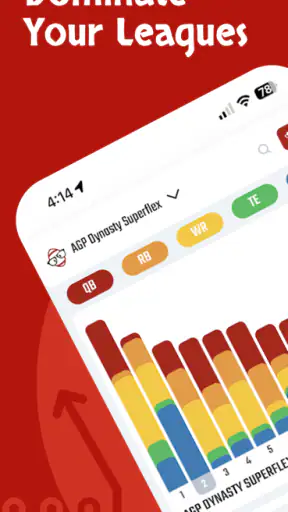
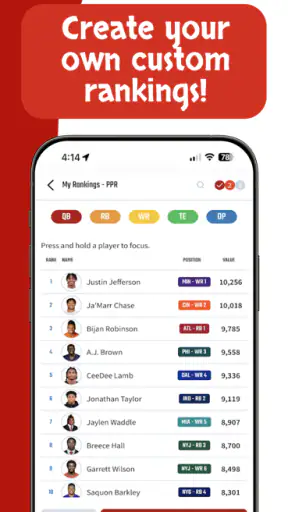
- Helpful dynasty rankings and player values for long-term fantasy decisions.
- Regular updates reflect trades
- injuries
- and changing player outlooks.
- Useful for comparing prospects and planning future roster moves.
- Content is focused specifically on dynasty fantasy football strategy.
- Can save time when researching players across multiple seasons.
Cons
- Some premium analysis or features may require a paid subscription.
- Player evaluations can differ from your league’s scoring and roster settings.
- Frequent updates may feel overwhelming for casual fantasy players.
- Limited value for users interested only in redraft fantasy football.
- Some recommendations may rely on subjective expert opinions.